
*Treasures*
▼Fudou Myouou (Acala, also known as the Fierce Deity of Fire)
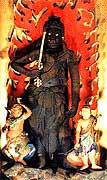
This figure of Ensen-ji is 49.5 cm (about 19.5 inches) high. It is constructed by assem- bling separately carved blocks of wood - a technique known as "yosegi-tsukuri" - and was probably made some time in the Edo Period (1603-1867). With a lotus flower on the top of the head and his pigtailed hair flowing down the left shoulder, he stands on a throne of rocks with the left foot a step forward. He presents a really fearful appearance, holding a sharp sword in the right hand and a coil of rope in the left with burning flames surrounding the figure. He is flanked by two child servants, Kongara and Seitaka - a style known as Fudou Sanzon or Fudou Triad.
▼Jyuusan Butsu (Thirteen Buddhas) - Hanging Picture Scroll
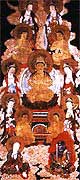
In Buddhism it is thought that human beings repeat cycles of transmigration in the "three realms of the world" (the realm of desire, the realm of form, and the realm of non-form) and the "six lower states of existence." The dead undergoes a series of trials in the world of the dead by the ten lords, who will then rule where he or she should go. In the course of Buddhist history, the ten lords came to be associated with their respective original states from which their incarnations were manifested, and it also came to be believed that Jyuusan Butsu or the Thirteen Buddhas would save the dead at various memorial occasions after his or her death.
▼Shou Kannon Bodhisattva
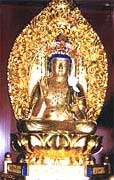
This figure of Ensen-ji wears a crown topped with tiny images of Amida Nyorai (Amitabha Tathagata), drapes silk cloth round the body (called "jyohaku"), wears a kind of loose, pleated trousers (called "mo"), and also drapes a heavenly garment known as "tenne" round his hands and body. Kannon is adorned with a brooch, bracelet, and necklace, and sits cross-legged on a lotus flower. The figure is 36.2 cm (about 14.3 inches) high and is constructed by assembling separately carved blocks of wood ("yosegi-tsukuri" as previous explained). It was probably made some time in the Edo Period.
▼Roku Jizou-son (Jizou of the Six Lower States of Existence)
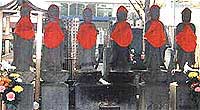
Roku Jizou represents Jizo Bodhisattva who appears in six different forms of incarnation to save suffering souls wherever they are in "rokudo" or the six lower states of existence (hell, and the realms of hungry spirits, animals, asuras, men, and heavenly beings). These six figures of Ensen-ji were constructed in November 1799 and are placed in the graveyard to the left of its gate.
▼Kosodate Enmei Jizou-son (Children-rearing Jizou of Longevity)
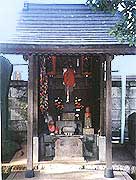
This figure was made in 1791 as the figure of popular Jizou worship in this area. It was moved from its original place in Sangen Chaya to Ensen-ji on May 21, 1968, and has continued to be worshiped devoutly. The figure is No. 4 of the Six Jizou Bodhisattvas of Tamagawa.
▼Koushin Kuyoutou (Memorial Towers for the Blue Warrior)
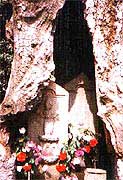
Two wood monument-type Memorial Towers for the Blue Warrior are placed in a big cavity at the root of a big hinoki tree at the right of the temple gate. They had originally been in front of the gate and was later moved to the present place together with the tree when it was cut.
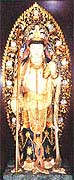
Jyuuichimen Kannon (Eleven-faced Kannon)
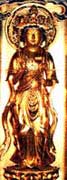
Kannon Bosatsu (Avalokitesvara, also known as Goddess of Mercy)
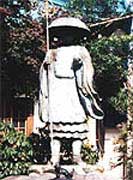
Statue of Koubou Daishi (posthumous title of Kuukai) as a Wandering Ascetic
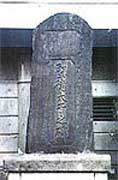
Stone Monument of Crown Prince Shoutoku
